COMESA urges Member States to harness full potential of $5bn ASCENT Power Initiative
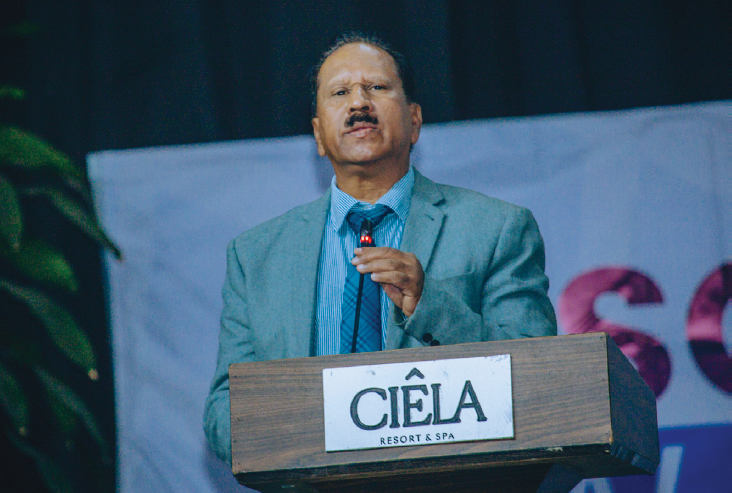
Common Market for Eastern and Southern Africa (COMESA) Assistant Secretary for Administration and Finance Dr. Dev Haman has urged partner Member States to focus on five strategic priorities to realise the full potential of the Accelerating Sustainable and Clean Energy Access Transformation (ASCENT).
Mooted in June last year, ASCENT is a US$5 billion initiative aimed at electrifying 100 million people across Eastern and Southern Africa by 2030.
During the opening ceremony of the ASCENT Week, Dr Haman said firstly, there was need to align Member States’ energy policies and standards to attract investment and enable cross-border trade.
“Secondly, we need to invest in infrastructure development by expanding generation, transmission and distribution networks, especially in underserved areas. Thirdly, we need to engage the private sector by creating predictable, transparent environments for private capital to thrive,” he said.
He also said there is need to build capacity by investing in technical, managerial and financial skills across institutions.
“And finally, we shall put in place an inclusive Energy Access framework to ensure that the transition benefits all, especially women, youth and vulnerable populations,” Mr Haman said.
He underscored COMESA’s commitment to the renewable transition which he said was unwavering.
“We see it not as an end, but as a means towards achieving our broader aspirations of economic growth, social equity, regional unity, and environmental stewardship. I have no doubt ASCENT will be productive and impactful,” Dr Haman said.
He said the gathering at Ciela Resort was not only a symbol of commitment, but also a signal of collective purpose – a purpose rooted in the desire to build a resilient, interconnected and sustainable energy future for the Eastern and Southern African region.
“We meet at a critical juncture in our development journey. Globally, the energy sector is undergoing a seismic shift moving away from fossil fuels and toward clean, renewable and decentralised systems. In COMESA, this transformation is not aspirational, it is essential,” he said.
“Our industries face high energy costs, rural communities remain largely off grid and our economies are vulnerable to external shocks from volatile fuel prices to the intensifying impacts of climate change,” he said.
Yet, within these challenges lies opportunities.
“Most of the countries represented here are endowed with abundant renewable energy potential: solar, wind, hydro, and geothermal. The question is not whether we can harness these resources but how quickly, how equitably, and how sustainably we can do so,” he said.
Speaking at the same event, COMESA Assistant Secretary for Programmes Amb. Dr. Mohamed Kadah said universal energy access targets are unlikely to be attained at the current pace, which is particularly challenging for low-income and rural communities living in developing countries.
“Yet the global transition to a renewable, decarbonised, decentralised and efficient energy system provides a sustainable solution to delivering energy to communities at the last mile,” Dr Kadah stated.
He said policy and institutional reforms targeted at stronger governance and smarter energy policies can unlock investment and accelerate progress.
“As countries make that shift, energy needs, priorities and capacities of diverse gender and vulnerable groups and communities need to be integrated into the energy policies and strategies to ensure that our efforts reflect the differentiated and context-specific realities and needs of our region,” Dr Kadah said.
He was happy to acknowledge that ASCENT was designed to meet the challenges associated with energy access by accelerating energy access through grid and off-grid solutions.
“We are here to facilitate the effective optimalization of regional platforms through dialogue and knowledge exchange, supporting Member States in preparing bankable projects, providing technical assistance and policy advisory services, mobilising the private sector, and mobilising development financing as well as ensuring that ASCENT interventions are inclusive, scalable, and sustainable,” said Dr Kadah.
And Government declared its full commitment to joining ASCENT.
During the official opening session, Zambia’s Minister of Energy Makozo Chikote said Government believes that through regional collaboration, shared innovation and strategic investment, ASCENT can bridge the energy access gap, not just for Zambia, but for its neighbours in Malawi, Zimbabwe, Mozambique, Tanzania, Namibia, Botswana and beyond.
Mr Chikote said ASCENT’s three pillars – regional and national platforms, grid electrification, and scaling distributed renewables align seamlessly with Zambia’s national energy strategy.
“We are particularly encouraged by the programme’s emphasis on clean energy technologies. Zambia enjoys one of the highest solar irradiation levels in the region, averaging 5.5 kWh/m²/day. Yet, our installed solar capacity is under 400 MW. This is a missed opportunity we intend to correct. I believe that ASCENT offers the technical and financial scaffolding to scale this capacity exponentially,” he said.
In a speech read for him by minister of Environment and Green Economy Mike Mposha, Mr Chikote said Zambia’s economy has grown steadily over the past decade, driven by mining, agriculture, and manufacturing among other key sectors adding that the country has increased national electricity access from 34 percent in 2021 to 54 percent by 2023 while the rural access increased from eight percent to 34 percent during the same period. He also urged the private sector to seize the opportunity ASCENT presents.