

ASCENT Digitalization Platform
- Home
- ASCENT Digitalization Platform
Why Digitalization Matters
Digital technologies can significantly accelerate progress in energy access and climate action. They help governments and private providers work faster, more transparently, and at lower cost by improving planning, monitoring, reporting, and the overall management of energy-access programs. Across Eastern and Southern Africa, businesses and energy providers are increasingly adopting digital tools—such as mobile-enabled payments, IoT sensors, real-time data platforms, and remote monitoring systems. This shift toward digital operations generates valuable data and strengthens service delivery, creating a significant opportunity for COMESA and ASCENT countries to build an efficient, interoperable, and scalable digital ecosystem for electrification.
What ASCENT’s Digital Platform Offers
ASCENT is establishing integrated, end-to-end digital architecture that countries can adopt fully or selectively depending on their needs. The platform brings together data, tools, and systems that support the entire project cycle —from early planning to verification and results reporting and carbon monetization. It gives precedence to widely adopted digital tools that exhibit the highest degree of compatibility and interoperability potential with other relevant software currently applied by businesses and governments in the region. While this architecture is promoted at the regional level, individual countries can adopt it flexibly, either in its entirety or selectively, based on their specific requirements and existing systems.
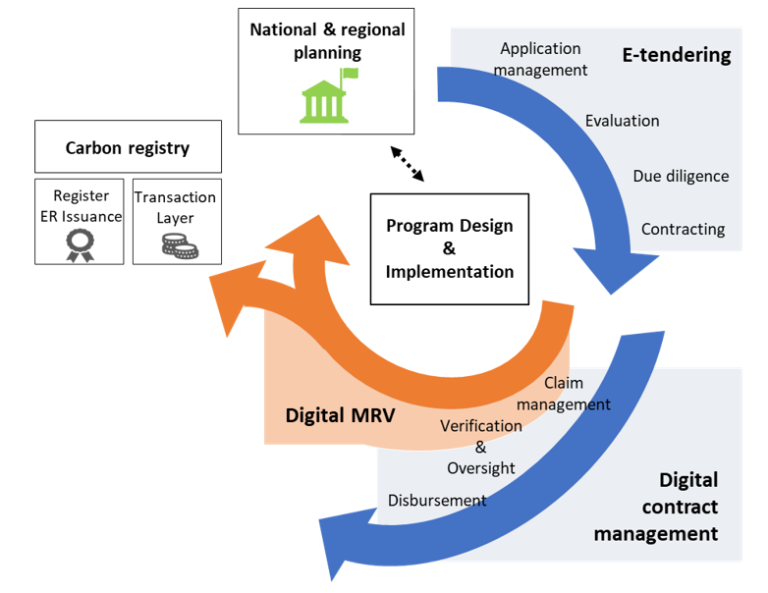
Three Core Application Areas


Geospatially informed Energy Planning
Tender and Contract Management
Digital Ecosystem for Electrification
How ASCENT Supports Countries
COMESA’s digital tool promotion strategy is grounded in inclusivity, relevance, and sustainability. All countries, whether already involved in ASCENT or exploring future participation, are eligible for support. COMESA assists countries at different stages of their digitalization journey—from assessing needs and setting up solutions to piloting and scaling them for greater sector impact.

COMESA acts as the regional integrator, ensuring compatibility across countries and supporting capacity building, best-practice sharing, and long-term sustainability.
Key initiatives to date
Regional dMRV platform
The ASCENT Program supports large-scale electrification across 21 countries in Eastern and Southern Africa, making a strong regional MRV system essential. Progress is tracked nationally and consolidated through a centralized regional digital MRV platform managed by COMESA.
For countries using different MRV tools, COMESA is promoting interoperability, aligned reporting standards, and data integration to ensure regional consistency and comprehensive monitoring. The platform will also include a carbon engine that links energy access data with carbon markets. This will automate the generation of carbon credits from verified electrification outcomes, helping ASCENT countries—especially those without existing carbon programs—access climate finance through faster, lower-cost, high-integrity carbon credit generation.
click here to learn more about ASCENT’s approach to climate finance

Technical Assistance and Capacity Building
COMESA provides extensive support to help ASCENT countries identify, pilot, and adopt relevant tools. For countries with existing digital tools, opportunities for technical and organizational enhancements, which comply with national laws and regulations, can be explored. Where gaps exist, COMESA can guide and support the adoption of necessary tools. Specifically, COMESA plans to fund the setup of relevant tools.
COMESA’s Advocacy and Knowledge Sharing
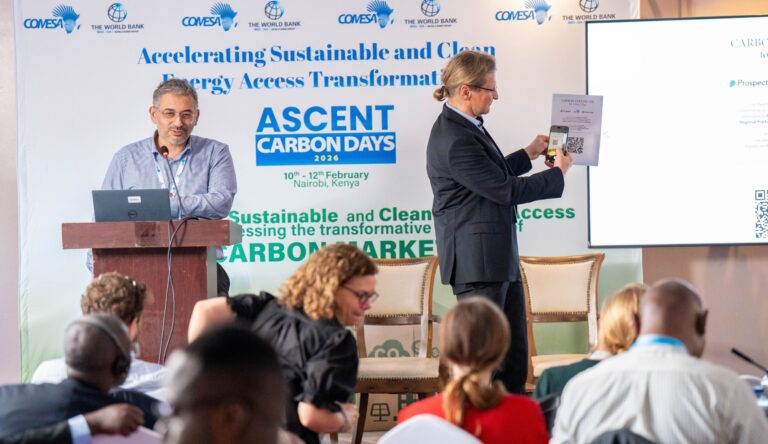
COMESA drives digitalization through knowledge exchange and advocacy, leveraging its convening power to raise awareness amongst ACENT countries about existing digital solutions and the process for their adoption. In collaboration with the World Bank, COMESA has for example organized webinars on digital best practices and carbon finance, appointed focal points in each country for digitalization and climate finance, and supported their participation in a major climate finance conference, where delegates were able to meet providers of digital solutions.
Digital Tools Presented at the 2024 Innovate for Climate Conference
| Software | Developed by | Segment | Main Contact | Video Link |
|---|---|---|---|---|
| Delta e-sourcing | Bip Solutions | E-tendering/contract management | Mark Breakenridge mark.breakenridge@bipsolutions.com | Click here |
| Tactiv | Tactiv | E-tendering/contract management | Damien Zeller damien.zeller@tactiv.net | |
| Global Electrification Platform (GEP) | ESMAP / World Bank | Geospatially informed planning (open access) | Benjamin Stewart bstewart@worldbankgroup.org | Click here |
| Odyssey | Odyssey | End-to-end, including technical studies for mini-grids, e-tendering/contract management and dMRV | Susan Smith susan@odysseyenergysolutions.com | |
| Off-grid planner | Reiner Lemoine Institute | Technical studies for mini-grids (open source) | Dr. Catherina Cader catherina.cader@rl-institut.de | Click here |
| OnSSET | KTH Royal Institute of Technology | Geospatially informed planning (open source) | Shaky Sherpa ssherpa@worldbank.org | |
| Prospect | Access to Energy Institute (A2EI) | dMRV (open source and open access) | Stefan Zelazny stefan.zelazny@a2ei.org | Click here |
| SmartME | Adalia | E-tendering/contract management | Stefan Grabowski Stefan.Grabowski@adalia.fi | |
| VIDA | VIDA | Geospatially informed planning | Nabin Raj Gaihre nabin@vida.place | Click here |
How to Request Support
Countries can request digitalization support through COMESA.
Eligibility
All ASCENT countries—whether currently participating or planning future engagement—are eligible to request digitalization support.
Available Support Services
Conferences & Events
- ASCENT Week 2024 – Leveraging Digital Technologies
- ASCENT Week 2024 – Deep Dive: Digital Monitoring, Reporting and Verification (dMRV)
- ASCENT Carbon Day 2024 – ASCENT digital MRV: Enhancing Efficiency and Integrity of Energy Access Programs and Carbon
- I4C – Making progress on project implementation – 13th September 2024_ berlin, Germany_Edited_1
- I4C – ASCENT dMRV Enhancing Efficiency and Integrity of energy access programmes and Carbon finance_13th September 2024_ berlin, Germany