
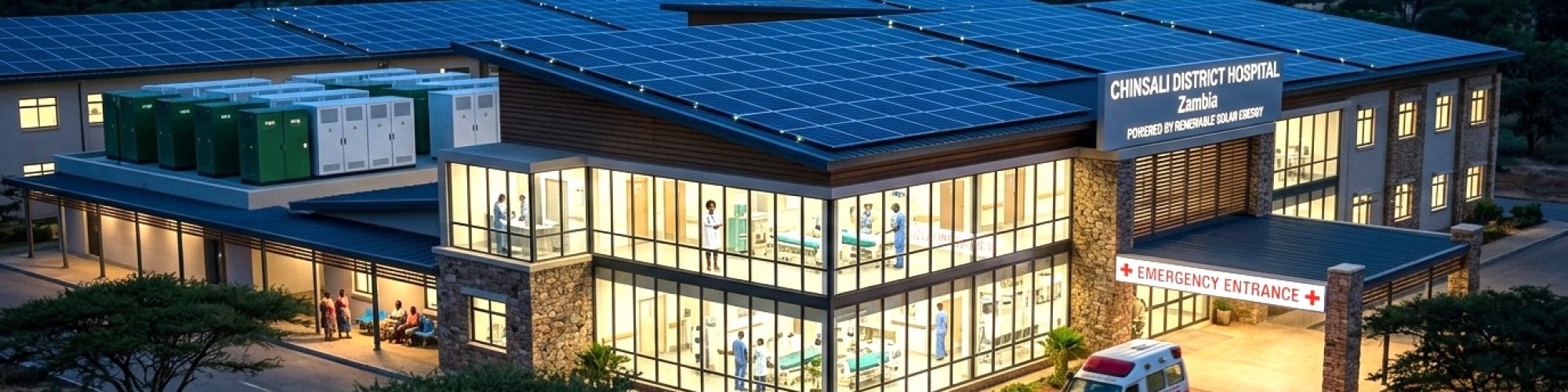
ASCENT: Increasing Human Capital Through Electrification of Public Institutions (Health Centers and Schools)
Access to electricity is essential for human capital development and poverty reduction. Without reliable power, providing quality education in schools and delivering effective health care in clinics is nearly impossible. Electricity access also drives productivity and inclusive economic growth, making it a critical step toward ending extreme poverty. Yet Sub-Saharan Africa faces the world’s largest energy access gap, with only 43 percent of the population being electrified. Not surprisingly, the region also ranks low on the Human Capital Index, with 25 of the 30 lowest-scoring countries located in Sub-Saharan Africa.
ASCENT: Long-Term Performance-Based Service Model
To date, most public institution electrification efforts have been grant-based, donor-supported projects focused primarily on the procurement of solar assets owned by public health and education institutions. The asset ownership model is illustrated below:
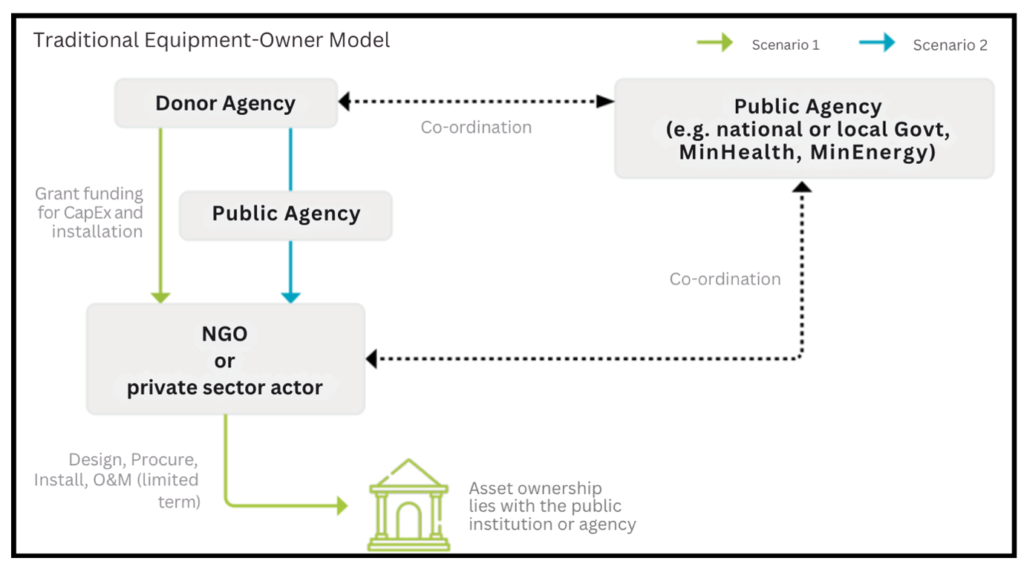
The asset ownership model is attractive because it prioritizes timely disbursement over long-term operation and maintenance (O&M) planning. However, this approach compromises the sustainability of solar PV systems, as the focus is placed on asset procurement rather than service delivery and performance.
Recognizing the sustainability shortcomings of the asset ownership model, the ASCENT program advocates for a performance-based “energy-as-a-service” model to ensure long-term viability. This approach leverages the expertise and capital of the private sector to deliver energy services to public institutions, with financing and incentives structured over the long term. The model also provides a strong platform to mobilize the private investment needed to close the energy gap in the health and education sectors. The energy-as-a-service model is illustrated below:
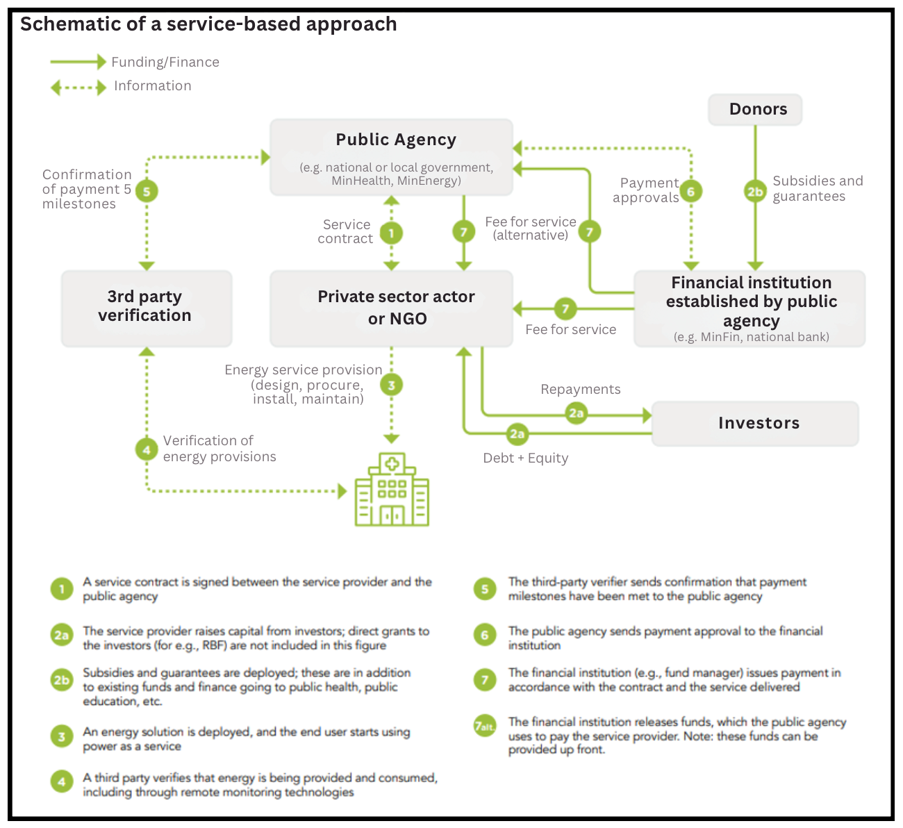
While shifting from an equipment-ownership model to a service-based approach helps avoid many of the sustainability pitfalls of the asset ownership model, ASCENT will still need to overcome several barriers for the energy-as-a-service model to be viable in the context of public institution electrification. These include:
- The affordability of energy services and the public sector’s ability to pay for them.
- The willingness of the private sector to raise capital for these interventions.
- The risk of crowding out national companies.
- The high transaction costs associated with the energy-as-a-service model.
- The risk posed by potential grid extensions.
- The persistence of more traditional grant-based models.